Saturday, 31 December 2011

Photos of the day


Here are a selection of photos I saw on dailymail.co.uk. They are incredible photos from the early 20th century, and were taken by the millionaire French banker and philanthropist Albert Kahn.

Using his massive fortune, Kahn sent a group of photographers to more than 50 countries worldwide. They took the earliest colour photographs in countries such as Brazil, the United States and Benin republic.
 I think they are simply mind blowing. Please I would love to get your comments on the photos. What do you think?

Stunning: The hustle and bustle of the Thames in early 20th Century London is captured in this image
The river Thames in early 20th century London


Different times: Revealing how the world has since changed, this picture shows a traditional-looking couple in Holland in the early 20th Century
A traditional-looking couple in 20th century Holland


Changing world: The earliest versions of cars can be seen in this early 20th Century Canadian street
Twentieth century Canada


Amazing: This picture was taken in the then West African country of Dahomey - which is now the Republic of Benin. For these villagers it was most likely the first time they had seen a camera
Villagers in the west African country of Dahomey, now known as the republic of Benin


Revealing: This culture of Algeria was brought to life in this picture, which was part of Albert Kahn's attempt to promote peace and understanding across the world
A colourful display of Algerian culture


Uniting the world: The ambition of Albert Kahn's project is captured in this early 20th Century image of China, with two curious youngsters watching the photographer at work
Two curious youngsters watch the photographer in China


Opening up the world: A traditional scene from Vietnam. This picture is one of the earliest-known colour photographs from the country
A traditional scene from Vietnam


click here for more photos on Daily Mail.

Thursday, 29 December 2011

We stop being selfish at 33


A recent study by a UK charity claims that when we reach 33 we lose the 'all about me' attitude and begin to consider others' feelings more frequently.

The Make-a-Wish foundation revealed in its study that the older we grow, the more selfless we become in almost all areas of life. Over 33's are likelier to
  • Look out for their neighbours
  • Give up their seats for elderly people on public transport
  • Donate their unwanted clothes and items to charity rather than throw them away
  • Get involved in issues affecting their communities
In contrast the under 33's were likelier to put themselves first in all circumstances.

What do you think of the study?

Do you agree? Has growing older made you less selfish?

Wednesday, 28 December 2011

Cartoons for a laugh


Okay, this is not your typical 'cartoons for a laugh'. I laughed at some of the cartoons but I also had a tear in my eye. What do you think?


World at a Glance


Egyptian court bans female virginity tests


In Egypt, a court has put an end to forced virginity tests on females detained in military prisons. 

Judge Aly Fekry, head of Cairo's administrative court, ruled that the army could not use the test on women held in military prisons after protester, Samira Ibrahim filed a case.

Ibrahim accused the Egyptian army of forcing her to undergo a virginity test after she was arrested in Tahrir Square during a protest in March. 

Fekry decreed that what happened to Ibrahim was illegal and any similar occurrence in the future would also be considered illegal. 

The military said the tests were used so women would not later claim they had been raped.

Meanwhile, the trial of the ousted Egyptian president,Hosni Mubarak, has resumed following a delay of almost two months.
Mubarak, his two sons, the former interior minister and senior police officers face a range of charges including involvement in the deaths of hundreds of protesters and corruption during his three decades in office.
Mozambique to produce antiretrovirals

Mozambique is set to become the first African country to its produce its own anti-retroviral drugs. Health Minister, Alexandre Manguele announced that the drugs used to treat HIV/Aids will be ready by July 2012.

 It will be produced in partnership with Brazil.
 Both countries signed an agreement last week to build a factory producing antiretrovirals and other drugs in the southern city of Matola.

It is hoped that the factory will benefit thousands of HIV-positive Mozambicans in need of treatment.


One in three Yemeni children malnourished

In Yemen, a survey has found that nearly one in three children suffer from moderate or severe malnutrition. The survey conducted by Yemen’s ministry of public health and population, and UNICEF, found that nearly 60 per cent of children were underweight and more almost 55 per cent were stunted in their growth.
The UN says more than seven million people – a third of the population – go to bed hungry. The harsh economic condition in the country means it will probably need some form of assistance for two to three decades.
Aid workers hope the shocking figures will prompt donors to act immediately.
Nigeria's Christian body warns of religious war

 Nigeria’s top Christian organisation has warned that a spate of bombings in the country could lead to a religious war. The warning from the Christian Association of Nigerian (CAN) came after the Islamist group, Boko Haram, launched a series of bomb attacks near churches in three different states on Christmas day, killing up to 40 people. 


The secretary general for CAN, Saidu Dogu called on Muslim leaders to control their faithful, saying Christians will be forced to defend themselves against further attacks.


The spiritual leader of Nigeria’s Muslims, the Sultan of Sokoto Muhammadu Sa’ad Abubakar said that it was not a conflict between Islam and Christianity.


India passes anti-corruption bill


The lower house of India's parliament yesterday passed an anti-corruption bill after hours of debate. The 'Lokpal' or watchdog bill was passed by a majority of the lawmakers present, however a portion of the bill that aimed to amend the constitution and make the watchdog a constitutional body was rejected.


 The legislative showdown is the culmination of months of angry political debate and public protests that brought tens of thousands of middle-class Indians to the streets. The bill must now be passed by the upper house and signed by the president before it comes into effect. Critics say the watchdog will be ineffective without constitutional backing.


Giant escalator for Colombian slum 
ritics say the watchdog will be too weak without constitutional authority.

Officials in Colombia's second-largest city on Monday have installed a giant, outdoor escalator for residents of one of its poorest slums.

For generations, the 12,000 residents of Medellin's tough Comuna 13, which clings to the side of a steep hillside, have had to climb hundreds of large steps which, authorities say, is the same as going up a 28-story building. Now they can ride an escalator, in what the mayor of Medellin said is the first massive, outdoor public escalator for use by residents of a poor area.

Officials say the $6.7 million escalator will shorten the 35-minute hike on foot up the hillside to six minutes.


Researchers predict drop in frankincense production


Dutch and Ethiopian researchers have predicted a 50 per cent decrease in the production of frankincense in the next 15 years due to the falling population of frankincense trees.
 A study of Boswellia trees in Ethiopia found that their numbers could drop by 90 per cent in the next 50 years if the trees are not protected from fire, grazing and insect attacks. The aromatic resin — which is used in incense and perfume, and is one of the gifts that features in the Christmas story of the Nativity

Thursday, 22 December 2011

West African Sun


I love West Africa’s Sun

Shining bright

Beaming vibrant energy

Penetrating earth’s center

Giving life to this citadel on earth's equator


Tanned skin

Dark chocolate candy

Earth yields

And flows with its bounty


Sweet yams

Fresh corn

Sprouting vegetables


Strong scented-meat

roasting on wooden spines

Goats and rams

Wild chickens and boar


Youthful energy

Skips and hops

Feet grazing against

earth’s red soil

Women’s hips gyrate

Rhythmically


Earthy hands

Scoop water from the spring

Clay pots balance

on sore scalps

As we toil and laugh


In the shade of trees

We find rest

Muslims and Christians

Idol worshippers, herbalists

And voodoo doctors


We devour the flesh

Of zesty fruits

Licking our juice-laced

fingers

Enjoying the warmth of

West Africa’s Sun


This is true harmony

This is true oneness

Let earth feel her worth

Let dreams be birthed

(by Uzo Ugwu)

Wednesday, 21 December 2011

Rage Against Religion


(This is the concluding part to 'We "don't do God" in politics. Enjoy it).

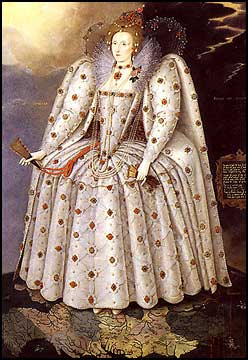
Before Queen Elizabeth I ascended the throne of England, the country had had its fair share of religious strife and bloodshed. Her predecessor, Queen Mary I, notoriously burned protestants in a bid to return England to Catholicism.
It was under the prevailing circumstances that Elizabeth I declared:


“I never had any intent that (my) subjects should be troubled or molested by examination or inquisition in any matter either of their faith or for that matters of ceremonies, as long as they shall in their outward conversation show themselves quiet and not manifestly repugnant to the laws of the realm.”

She laid the foundation for religious freedom and tolerance.

That was back in the 16th century. Things have moved on since then. As I mentioned in the previous post, secular neutrality is now touted as the best stance governments should take towards religion.

Under a secular government:

• Citizens are granted religious freedom

• The legal system is free from religious control

• Political leaders are free to exercise whichever religion they choose
• State religion is disestablished

• Public funds are not used for religious purposes

In essence, the machinery of state is neutral, leaving individuals free to hold their own beliefs.

One of my readers summed it up eloquently in a comment he posted. He wrote:

“ I think it is better for governments to steer well clear of religion, because,as history has shown the tendency to inflict harm on society increases exponentially when religion is cited as the driving force for a particular course of action.”

On paper, neutral secularism looks good. In arguments, it sounds cogently reasonable. However, it is impossible to separate politics and religion.

Why? Well, first of all, we need to go back to the basics. What is religion?

The website oxforddictionaries.com defines religion as:

• The belief and worship of a superhuman controlling power, especially a personal God or gods: ideas about the relationship between science and religion

• A particular system of faith and worship

• A pursuit or interest followed with great devotion

The two underlying words here: belief and devotion.

It would be absurd to presume that any single human being is devoid of these two qualities.

Atheism is premised on the belief that there is no God.

Humanism rejects religion and favours human welfare and values.

Secularism is premised on the belief that keeping religion separate from the state is essential to promote equality.

Even if a person claims not to be religious, an atheist or agnostic, s/he must be devoted to something. It could be the pursuit of fame, money, fitness, health or knowledge. We are wired to want, and our wants drive us to pursue. Therefore by nature we are religious. How then can we separate religion from politics?

In theory it looks so simple - take a big knife and lop them asunder. In reality, it’s like going down to the seashore and trying to separate the water from the sand. An impossible task!

The very idea that a state can be neutral is a myth. Who determines what is neutral? The atheist? The agnostic? Why should their beliefs, which boils down to religion, be favoured over others?

Many times neutrality is a rejection of religion, which in itself is a bias against religion and removes the claim of neutrality.

Interestingly many states categorised as ‘secular’ maintain a lot of religious practices and symbols.

In France for example, many Christian holy days are official holidays for the public administration, and teachers in Catholic schools are paid by the state.

In April this year France banned women from wearing face veils in public. Anyone seen wearing niqabs and burqas could be fined up to €150, or attend lessons in French citizenship.


As stated earlier a neutral country allows individuals the right to hold their own beliefs. Question: does France’s actions display neutrality?

The United States is another example of a secular government. How is it that since 1937, the United States presidential inauguration has included one or more prayers given by members of the clergy? It doesn’t add up.

As mentioned in the earlier post, in the UK critics were kicking up dust because the Prime Minister, David Cameron, said that Britain is a Christian country. Many found it insulting that the PM should make such a suggestion in a multicultural society that is home to various religions. It is a secular country, they argued. Illusions of grandeur. In Britain’s upper house – the house of Lords - Twenty-six bishops (including the two Archbishops) are members and are known as the Lords Spiritual. They are thought to bring a religious ethos to the secular process of law.

The simple advice Cameron proffered was: traditional Christian values should be revived in order to counter the “moral collapse” in Britain. He said "live and let live" had too often become "do what you please".

And that’s the problem with neutrality, it also implies anything goes, so there’s no moral compass that people can collectively follow.

Conversely religion offers a clear roadmap about acceptable and unacceptable moral behaviour. Now this does not translate to theocracy or the chopping off of heads and hands in the name of religion. No. It means each country has its religious base which sets the norm for its citizens. As Queen Elizabeth I said, people are entitled to individual faiths as long as they fall within the boundaries of the law.

One of my favourite Obama quotes is, what binds us together is greater than what drives us apart. I believe that.

We might practice different religions, but there are always meeting points. Most, if not all religions advocate love, fairness, honesty, tolerance and kindness amongst other virtues. The forces that bind us together are greater than the forces that drive us apart.

So if a leader says his/her country is a Christian or Islamic or humanist country, he could be saying in essence; this is our moral frame work. We will not persecute you for practicing a different religion, but we expect you to adhere to this way of life.

While neutrality might be upheld as the best policy, it opens the door to moral decline and a lack of direction. It is religion that molds a better tomorrow.

Inside the 'world's largest' blood store


This photo posted on dailymail.co.uk shows a blood bank said to be the largest in the world.

The centre located in Bristol, south west England, stocks more than 1,000 gallons of blood.

It handles 11,500 donations every week, i.e. 850,000 donations a year, making it the largest processing centre in the world.


One hundred hospitals in the south west of England benefit from the centre.

Demand for lifesaving blood is expected to rise over the festive period.