Monday, 12 December 2011

No thanks, I'll keep my identity!


"I think we've been through a period where too many people have been given to understand that if they have a problem, it's the government's job to cope with it. 'I have a problem, I'll get a grant.' 'I'm homeless, the government must house me.'
They're casting their problem on society. And, you know, there is no such thing as society. There are individual men and women, and there are families. And no government can do anything except through people, and people must look to themselves first."
Prime minister Margaret Thatcher, talking to Women's Own magazine, October 31 1987

(braindeer.com)


Whenever issues crop up regarding European Union treaties and Britain’s level of involvement, my mind backtracks to my days at University. There were two core modules I took at two different universities and both explored the definition of Britishness and British identity.

The Unanimous slant of the modules was the UK prides itself on being a sovereign nation and will kick against any measures that appear to erode its autonomy. The language was always ‘we can’t hand any more power to Brussels’.

Equally, in the media, British identity has been widely discussed and the overall perception is that Britain is losing its identity to Europe.
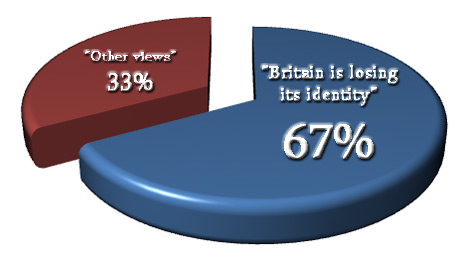

(Poll by Guardian newspaper UK, 2008)


So when British PM, David Cameron, vetoed a new EU treaty aimed at tightening fiscal policies in the Eurozone it came as no surprise to me. During a summit held last week (8th-9th December, 2011), 26 countries signed up to a treaty that sets out tougher budget rules. It is aimed at preventing a repeat of the current Eurozone crisis.

New rules include:

• a cap of 0.5% of GDP on countries' annual structural deficits

• "automatic consequences" for countries whose public deficit exceeds 3% of GDP

• a requirement to submit their national budgets to the European Commission, which will have the power to request that they be revised

Cameron’s decision to opt out of the treaty has elicited much criticism and commendation.

Critics say the UK has placed itself in a precarious position where it can be easily marginalised, while supporters believe the UK is better off without the EU.

Only time will tell if Britain has made the right decision. However, in my opinion, PM’s reaction highlights issues of nationality and perceived identity.

I will compare countries' identities to an individual's identity. There are many components that make up an individual – some fixed and some variable. For instance the colour of a person’s skin, his/her gender and physical attributes such as height, are fixed.

Other things like financial status, nationality and even personality are subject to change.

Now it is the prerogative of the individual to set out the parameters of who he/she is. Therefore a person is who he/she imagines him/herself to be.

The same goes for nations.

In his book, ‘Imagined communities,’ Academic Benedict Anderson defined a nation as an ‘imagined political community.’

It is imagined because members of even the smallest nation will never know most of their fellow members, meet them or even hear of them. Yet in their minds they carry an image of shared affinity and sense of belonging between them.

The UK has a population of 62 million. Each British person imagines him/herself to be part of a wider community of Brits, even though he/she has never met them.

What the community provides for its members is a sense of identity and belonging.

Kathryn Woodard in her book ‘Identity and difference’(2002) argues that we build identity through difference. For instance, flags, uniforms, colours can be used to represent our difference.

Hence one way of defining Britishness would be: we are British because we are NOT European. That means not being part of the single currency. It also means limiting the amount of power the European Commission can exercise over British financial institutions.

Attempts to further integrate with Europe would threaten the nation’s definition of who it is. Just like an individual that has drawn the parameters of who he/she is, the person will fight hard to maintain the status quo.

Britain is not an exception. Haven’t you found yourself wondering sometimes why German Chancellor Angela Merkel never speaks English? Or why French President Nicolas Sarkozy speaks French unfailingly at international conferences? That sheds light on the parameters of their identity as people and countries.


Former Nigerian leader, Olusegun Obasanjo, throughout his presidency stuck to a native dress code. Again, that said a lot about his sense of identity.


What I’d like to know is if we are better off with these distinctive identities.

Is it necessarily a bad thing if the world becomes homogenous? Would it be detrimental if we did away with national flags, passports, native languages, territorial barriers? Okay, that would be extreme. But how flexible should a country be in maintaining the parameters of its identity and accepting change when due?

How far would you go to defend the definition of you?


A poem:

Becoming ‘Me’

Wheels are rolling, the train rattles on

Charging down the slope with full momentum

Ebbs and tides of memories,

Conversations from the past

Rebound like echoes in my head

Memories of the past rear

Their head

They run after me; tear at me relentlessly


I am thousands of miles away but I can’t run away from me

I cannot run away from home

The place where I became me

Home is the taste on your lips that won’t go away

Home is the laughter that regurgitates in

Your head

It is the place a carefree boy frolicked in his underpants

Where he climbed the mango tree

And unhinged ripe juicy mangoes

It is the place he ate roasted corn off the cob

It is the place soldier ants attacked his

Sweet sticky fingers in bed at night


Time flies by dreams multiply

Hunger, thirst, starvation

Mosquitoes, malaria

Suffering, suffocation

Corruption, disruption harum-scarum,

Cackling laughter, clapping hands

Effusive expressions

Lives merge

Privacy’s submerged

Please take me away from this dizzying mess

Take me to a safe haven of rest


Destiny collides with fate

Life fades into an apparition

Pink pouting lips, cascading hair,

Self-deprecating demeanours

Get me out of this crazy dream

Democracy, refreshing reliability

Efficiency, opportunities,

What on earth is this dream?


Counsellors, commercialised compassion

Lost humanity

Come be my countryman

Don’t be my countryman

Come stay with me

Run away from me

We are silent trees swaying on the underground

We are mute objects hurtling though the streets

We are crazy creatures denying

One another’s existence

I matter to me

I am somebody

But matter to nobody


I want to hate you and

I want to love you, so

I love you because I can’t hate you and

I hate you because I can’t love you

I strive to be somebody

But end up becoming nobody

I am caught up in an endless stream

I become nothing but a flag, a figure

A colour

A name on paper

I am everything

I am me

(by Lydia Oluchi Ugwu)

Friday, 9 December 2011

The World at a Glance


At least 88 people are recorded dead in the eastern Indian city of Kolkata following a fire at a private hospital. Authorities say the blaze swept through the AMRI Hospital early Friday in the capital of West Bengal state.

Local television channels showed patients being rolled out on stretchers and distraught relatives waiting outside the hospital as smoke engulfed the multi-story building.

A senior official at the hospital says there were 160 patients at the facility at the time of the blaze.


Botswana has been ranked the least corrupt country in Africa by a non-governmental organisation for the 16th successive year. Leading NGO Transparency International released its annual corruption perception index which ranked Botswana 32 out of 183 countries.

Other African countries with high ranking include Cape Verde, Mauritius and Rwanda. Botswana’s success has been attributed to its establishment of several anti-corruption agencies.


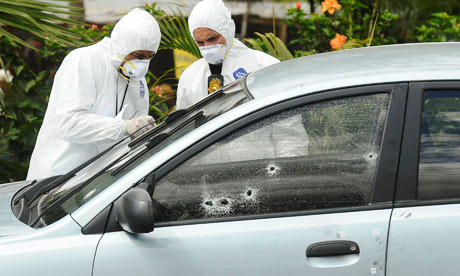
In Honduras, MPs have approved a law that bans motorcyclists from carrying passengers in a bid to stem drug-related killings. The move followed the killing of a radio show host, and a security expert/activist by men on motorbikes.

Reports estimate Honduras to have one of the world’s highest murder rates. In 2010, there were around 82 murders per 100,000 inhabitants, according to the United Nations Office on Drugs and Crime


Five Chinese officials have been suspended from their jobs after they were observed sleeping or reading newspapers during a video conference on stamping out laziness at work, state media reported on Friday.

The officials, all high-level workers at tax bureaux in the northern province of Shanxi, were supposed to be participating in a meeting to push better work discipline, the official Xinhua news agency reported.

Chinese officials frequently have to sit through long, tedious meetings and listen to turgid reports on the latest missives from Beijing on Communist theory or other dry subjects.


Norway is facing a butter crisis due to the growing popularity of a fat-rich diet among its citizens. The low-carb diet favoured by many Norwegians emphasises a higher intake of fats.

Butter is so scarce right now, that it's selling for $20 a pound, that's four times its normal price.Lars Galtung, head of communications at TINE, the country’s biggest farmer-owned cooperative said sales jumped to 20 percent in October then 30 in November.


Thursday, 8 December 2011

Get it off your chest


It has been such a dry week news-wise. The same old stuff has been reported in a dozen different ways… how I wish the riveting stories will jump out of their hiding places so that journalists will have something new to write about. Because if I read one more line about Europe’s crisis/Madam Merkel and Monsieur Sarkozy to the rescue, I’ll pass out with boredom.

And as if being in the eye of the storm (economically) is not enough, news reports have to rub it in with their predictable three-course meal – doom, Doom and DOOM.

 I really can’t stand the scale of negativity. It wouldn’t do much harm putting a positive spin on it every now and again. For instance, we all know unemployment is one of the biggest problems of today’s world. But pray tell, what do we achieve by churning out a steady roll of depressing stories about unemployment figures? Rehashing the problems won’t take us anywhere; talking solutions will.


So let me offer a fresh angle: unemployment is one of life’s biggest frustrations but it is also one of life’s biggest opportunities. Unemployed people can utilise the extra time on their hands to explore new ways of making a living outside the conventional 9-5 work-for-an-employer type-job.

                                                              Russian elections


Russians went to the polls and the result was so predictable – it’s Putin again! He was always lurking somewhere in the background, wasn’t he? Now he’s back again.

Hasn’t he had his fill from the cistern of power?? Surely Russia will not fall apart in his absence. Besides the last time I checked dictatorships and presidents for life were mainly associated with African leadership. Mr Putin is sure giving African leaders a run for their reputation.

                                                                   Egypt again
Egyptians have ousted their leader and now they are at each other’s necks. Protesters, the army and the Muslim Brotherhood are all locking horns. On paper democracy looks so easy and achievable. Translating it to reality is a different issue.


                                                                           Iran-mania
Iran...what shall I say? First of all it was Iraq. A dossier was conveniently whipped out detailing weapons of MASS DESTRUCTION held by the country. The country was raided, Saddam hung, then what? We haven’t been shown the weapons till date. Oh, I know, the weapons just grew wings and took flight. It’s not as if they weren’t there in the first place!

Next on the list – Muammar Gaddafi! Poor soul. He was sent to the great beyond without a shred of dignity. The country he built over years crumbled before his eyes like a pack of cream crackers.

Next! Oh yeah, now it’s Iran. According to a report by the Atomic Energy Agency its nuclear programme is geared towards weapons development and military use.

Let me take a detour…don’t worry you’ll soon see where I’m heading. Although the week has been dry, there was one highlight for me. The 70th anniversary of Pearl Harbour. Phenomenal pictures captured the devastation unleashed when Japanese planes bombed the US naval base. In total 2,390 Americans lost their lives in the attack.
In response the United States dropped two atomic bombs on the cities of Hiroshima and Nagasaki in August 1945. It is estimated more than 200,000 people died.

A world without nuclear weapons would be less stable and more dangerous for all of us.

- Margaret Thatcher (former British Prime Minister)

That brings me back to my rant on Iran. The Atomic Energy Agency report says Iran's programme is geared towards developing weapons but it does not give any detailed evidence to back up its claims.

Thing is, there is only one case in history in which nuclear weapons were used in warfare – Hiroshima and Nagasaki. The same country that devastated Japan invaded Iraq and attacked Libya, so Is this threat real or imagined?


Now I’m offering you a platform. What are those news stories that get under your skin? Or the stories you feel are not given sufficient attention, or perhaps a news dimension that has not been explored? Post a comment. Get it off your chest. Bring it on.

Wednesday, 7 December 2011

Half of a red tongue


‘You ain’t English – you’re black!’


That was the rant of a racist English woman on board a train in London. The 2.16 minute video posted on youtube was titled ‘My tram experience’, and boy, wasn’t it the experience for the unlucky passengers.

She had a child sitting on her laps and was surrounded by staring people but she didn’t care. F-words tumbled out of her mouth like the waters of Victoria Fall.

“ You ain’t English! you ain’t English either! Get back to your own %*#& country. Do you know what? Sort out your own countries don’t come and steal mine. Go back to where you come from. It’s my British country”.

For a woman who laid so much emphasis on being ‘English’, her vocabulary was highly impressive. It consisted of:

80% F-words

20% mumbo jumbo that could just pass for English

I felt sorry for the little boy sitting on her laps. He was visibly cringing with embarrassment – especially towards the end of the clip when he bowed his head in shame. Poor boy; he was probably willing the ground to split open and swallow him.

Poor passengers likely on their way home from some menial, demeaning job that most ‘English’ people won’t be caught dead doing. The woman stabbing her finger at them has possibly not experienced life beyond the borders of Europe or even UK.

Luckily for the passive passengers a confident woman on the train did not take it quietly on the chin, she told the racist woman to watch her words. A shouting bout ensued.

‘You’re not British.’

‘I am British.’

‘You’re not English; you’re black.’

Apparently black and British are two irreconcilable differences. Maybe white and British would go down better? Or maybe not. The woman did not spare Polish people in her tirade against the immigrants ‘overtaking’ her country.

If she was aware of history she would probably know that invasions are a characteristic of today’s world, shaping countries and redefining their boundaries. Indeed Britain has had several waves of invasions, and has itself invaded a vast number of countries.

Countries that invaded Britain


700/600 BC The Celts invade.


43BC Emperor Claduis invades (Romans)


450 The Anglo-Saxons invade


410 The Romans leave


793 The Vikings invade.

1066 The Normans(French) invade


1688 By the Dutch

Read more at wiki answers.

Countries colonised/invaded by Britain:


The Gambia Sierra Leone Nigeria British Togoland (1916–1956, today part of Ghana)Cameroons (1922–1961, now parts of Cameroon and Nigeria)British Gold Coast (now Ghana) Nyasaland (now Malawi) Basutoland (now Lesotho) Swaziland Egypt Anglo-Egyptian Sudan (1899–1956) British Somaliland (now part of Somalia) British East Africa: Kenya Colony Uganda Protectorate Tanzania : Tanganyika Territory (1919–1961) ZanzibarBechuanaland (now Botswana) Southern Rhodesia (now Zimbabwe) Northern Rhodesia (now Zambia) British South Africa South-West Africa (from 1915, now Namibia)


Anguilla, Antigua and Barbuda, Australia, the Bahamas, Barbados, Bermuda, Belize, the British Indian Ocean Territory, the British Virgin Islands, Canada, the Cayman Islands, the Falkland Islands, Gibraltar, Grenada, Guam, Guernsey, Guyana, Ireland, Isle of Man, Jamaica, Jersey, Montserrat, Nauru, New Zealand, Pitcairn Islands, Saint Helena, Saint Kitts and Nevis, Saint Vincent and the Grenadines, Singapore, South Georgia and the South Sandwich Islands, Trinidad and Tobago, the Turks and Caicos Islands, the United Kingdom, the U.S. Virgin Islands, and the United States.

The wave of immigration is just another form of invasion without the violence. And nobody likes to be invaded. The woman had grievances that she needed to get off her chest, and she did it in an extremely rude manner.

The last time I checked the news she had been dragged before a judge and remanded behind bars. Her application for bail was rejected. That response, to me, is equally extreme.

Even though there are many friendly, open-minded English/British people, there are also many who share her mindset. This might sound extreme but clamping down on their freedom to express themselves is a form of repression. Repression might work temporarily but it can have far-reaching consequences.

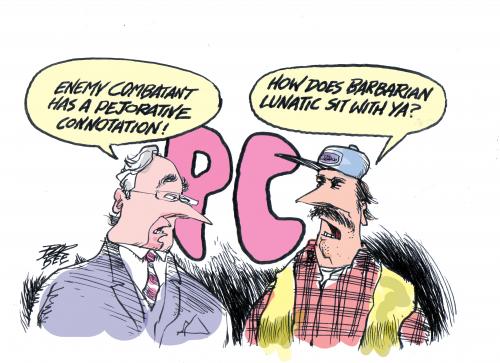
Am I supporting racism and bigotry? Not in anyway. Racism is distasteful in all its manifestations and must never be tolerated. And that’s why political correctness is a good thing. It curbs peoples’ excesses and forces them to tolerate others of differing backgrounds, views and orientations.

Definition, political correctness: ‘The avoidance of forms of expression or action that are perceived to exclude, marginalise or insult certain groups of people.’

However political correctness on the other end of the spectrum can be overwhelmingly ridiculous.


In 2007, Santa Clauses in Sydney, Australia, were forced to revolt for the right to say “Ho Ho Ho”, the traditional laugh of jolly old St. Nick. It turns out that their employer, the recruitment firm Westaff (that supplies hundreds of Santas across Australia), told all trainees that “ho ho ho” could frighten children and be derogatory to women. Why? Because it was too close to the American (not Australian, mind you) slang for prostitute. Instead, the Santas were instructed to lower their voices and say “Ha ha ha”. Westaff relented only after the story broke nationally, deciding to leave the belly laughs “up to the discretion of Santa himself “.

Source: listverse.com

The sad part is that political correctness does not give people a chance to air their feelings and debate issues they feel affects them. Many white British people feel they are being outnumbered in their own country. They also feel that their voices are being unfairly silenced because of a social obligation to treat minority groups with respect. That is not healthy for democracy. Rather the British government – and all governments opening their doors to immigrants – should foster a public sphere for debate.

Public sphere

Here’s a wikipedia definition:

“The public sphere is an area in social life where individuals can come together to freely discuss and identify societal problems, and through that discussion influence political action.

It is "a discursive space in which individuals and groups congregate to discuss matters of mutual interest and, where possible, to reach a common judgment."

If a platform for discussion is not created people will continue to feel hard done by. It is the only route for enlightenment and reaching a better solution. British people, for instance, do not realise that many of the immigrants ‘swamping’ their country come from former colonies whose wealth was once carted away to develop Britain. Many come from former colonies whose slaves laboured to build up Britain as we know it today. But that awareness can only be achieved through enlightenment. How to go about creating a platform is another matter on its own.

However, what the UK and other governments need is open, honest debate. Let people air their concerns. Let there be a rational discussion. It is an opportunity for both the government and the people to be enlightened.

What are your views? Your comments will be appreciated.

Funny list of PC terms culled from http://www.bored.com/pcphrases/


Bald - comb-free
Bald - folically independent

Bald - follicularly challenged.
Battle Fatigued - shellshocked
Body Odor - nondiscretionary fragrance.
Broken Down Automobile - mechanically challenged
Broken Home - Dysfunctional Family

Cannibalism - Intra-Species Dining
Cheating - Academic Dishonesty
Corpse - Permanently Static Post-Human Mass
Corpse / Stiff - Terminally Inconvenienced

Dishonest - Ethically disoriented.
Drug Addict - Chemically Challenged
Drunk - spacially perplexed

Fail - achieve a deficiency.
Fat - gravitationally challenged
Fat - horizontally gifted
Fat - person of substance

Gang - Youth Group
Garbage Man - sanitation engineer
Geek, Nerd, whatever... - socially challenged
Ghetto / Barrio - Ethnically Homogenous Area

Hamburger - Seared Mutilated Animal Flesh
Handicapped - Differently Abled, Handi-Capable
Homeless - residentially flexible
Homelessness - Mortgage-Free Living
Housewife - domestic engineer
Hunter - Animal Assassin
Hunter - Bambi Butcher
Hunter - Meat Mercenary

Ignorant - factually unencumbered
Insane People - Mental Explorers
Insane People - Selectively Perceptive
Insult - Emotional Rape

Lazy - motivationally deficient.
Learning Disability - Self-Paced Cognitive Ability
Library - Educational Resource Center

Old - chronologically gifted
Old Person / Elderly - Senior Citizens

Panhandler - Unaffiliated applicant for private-sector funding.
Paper Bag - processed tree carcass
Plagiarism - Previously Owned Prose
Po' - financially inept
Poor - Economically Unprepared
Poor - monetarily challenged
Pregnant - parasitically oppressed.
Prisoner - client of the correctional system
Prostitute - sex care provider
Psychobabble - constructivist feminist psychotherapy

Racist - genetically discriminating
Runny Nose - nasally gifted

Ugly - Cosmetically different.

Unemployed - Involuntarily leisured.

Tube tirade


Monday, 5 December 2011

Pics for a laugh

Man must survive


We're vying for the Guinness book of records!


Necessity is the mother of invention


This is sooo cool


So much work for palm oil


All set to resume work at the World Bank


You spies! I'll teach you a lesson!

Ulala...you look tasty mate


Free bungee jumping


Nothing can separate me from my best friend

Saturday, 3 December 2011

The World at a Glance

Zimbabwe: Police tackle male rape

In Zimbabwe, the police believe there is a nationwide syndicate of women raping men, possibly to use their semen for prosperity rituals. Three women are set to go on trial in the capital, Harare over the allegations. One victim alleged that he was raped repeatedly by three women that offered him a lift then injected him with a substance that produced ‘strong sexual desire’. The police have not revealed the number of reported cases but one counselor believes many victims are reluctant to come forward.

New Burmese law authorises protests

A new law in Burma will allow peaceful demonstrations to take place for the first time, according to state media reports. President Thein Sein signed the law which requires protesters to seek approval at least five days in advance.
Demonstrations were previously banned. It is the latest reform carried out by Burma’s civilian government since the military junta relinquished power earlier this year.


Saudi report warns against women drivers

In Saudi Arabia, a report has warned that allowing women to drive would provoke a surge in prostitution, pornography, homosexuality and divorce. The report, presented to the country’s legislative assembly by Muslim scholars said that if the ban was lifted there would be no more virgins in the kingdom within the next ten years. Though there is no formal ban on women driving in Saudi Arabia, a woman can be arrested for getting behind the wheel. Saudi women  have staged several campaigns to overturn the ban.

World’s ‘biggest’ insect discovered

An adventurer has discovered an insect that has been named the world’s largest. Former park ranger, Mark Moffet, discovered the giant weta up a tree in Little Barrier Island, New Zealand.
The cricket-like creature which has a wing span of eleven inches is so huge that it can eat carrots. The giant weta is the world’s largest specie of insect. The one found by Moffet weighs the equivalent to three mice.


Crematorium to generate electricity

A crematorium in the United Kingdom is installing turbines that will convert waste heat from corpses into electricity. The combustion of each corpse will produce as much as 150 kilowatt hours of juice – enough to power 1,500 televisions for an hour. The facility in Durham plans to sell the electricity to local power companies. The owner of the company said that the process makes cremation much greener.

Thursday, 1 December 2011

WHEN THE TRUTH HAS TWO VERSIONS


Describing the photograph I saw on facebook as ‘horrific’ would be euphemistic - it was much worse than that. Human bodies charred beyond recognition were arranged neatly across the ground. The caption below the picture – which I cannot remember precisely – explained that the bodies were as a result of an unprovoked Muslim attack on Christians in a northern state in Nigeria.


First of all I am human. Secondly, I’m a Christian and then a Nigerian, so the pictures tore me up inside. I was fuming. The story accompanying the photo went on to say that a group of people had been travelling by night on a ‘luxurious’ bus when they were stopped by a group of Muslim men parading as members of the armed forces. They were ordered to get off the bus and then doused in fuel and set ablaze.

 The writer, whose name I can’t remember, said the Nigerian government were aware of the horrific crime but had chosen to ignore it and at the same time muzzle the media on the issue. That made my head explode with rage. The activist in me was tempted to paste the story on President Goodluck Jonathan’s face book page, but my rational or should I say cowardly nature kicked in immediately reasoning that I would achieve nothing except possibly jeopardising my safety and that of my family. So I let it be; pushed it to the fringes of my mind and got on with life. That was in April.

Months later, on the 30th of November 2011, the photo resurfaced on facebook. This time the caption was Christians burnt alive by Sunni Muslims in NIGERIA (Posted by Jillian Becker in Africa…). There was no accompanying story; just a title that Christians in Yobe state were being massacred.


Horse riders in Yobe state
I had seen the photos before so I wasn’t exactly shocked nor did it provoke the same potent emotions as it did months back. However I did find myself teetering on the cusp of righteous indignation. Until a wisp of doubt flashed through my mind and my intended anger quickly melted into suspicion and misgivings. Why? You may ask. Well:

• The photos were not recent, why did the poster give the impression it had just taken place and was ongoing?

• Describing the Muslims as Sunni Muslims was completely alien to me – as it is to many Nigerians. There is no such Shiite/Sunni categorization among Muslims in Nigeria.

• Why was there no story accompanying the picture?

• Why an absence of verifiable sources like links or references?

Anyway, thanks to Google, I soon had differing information at my fingertips curtsey loonwatch.com
The story on loonwatch.com was far-removed from religious violence. According to the site, the fire took place in the Democratic Republic of Congo (central Africa) not in Nigeria (West Africa). It occurred when an overturned fuel tanker burst into flames in Sange town, South Kivu claiming more than 200 hundred lives – most of whom were people watching the World cup in their homes and local cinemas. The site provided links to African news site afrik.com and news agency, reuters that verified it was as a result of a fuel explosion.


In the light of new information, I asked myself who published the story and why?

Unfortunately I wasn’t successful in my attempts to get to the root of it; I never found out where the Christian massacre story originated from. But the fact that I jumped to a conclusion the first time I read the story in April and even spread the news among my friends shows how susceptible we are as readers; easily falling for anything that comes under the guise of news.

A caveat: I cannot diminish the fact that many countries like DRC are failing their citizens by neglecting adequate health and safety measures on their roads. In the same vein, religious violence is a serious issue in Nigeria and many other countries like Sudan, Ivory Coast and even Egypt. Many Christians in the north of Nigeria have lost their lives to religious violence and continue to do so in the most gruesome manner. But that’s an issue for another post.

After reading the actual story on the internet, I went back to my friend’s facebook page, where I read the story originally, and posted the loonwatch.com article then commented: “According to the above article, it actually happened in eastern DRCongo… no one can tell what's true and what's fake. Lesson is never take any story you read off the net at face value. Take it with a tablespoon of salt!”


Might sound comical but it is the reality. Anyone can paste anything on the internet; that does not make him/her a journalist or a purveyor of truth. That is not to say journalists do not get it wrong, fabricate stories or twist the truth. They do. However they are guided by a code of conduct. Any journalist worth his/her salt will abide by the simple ethics of truth, fairness, impartiality and objectivity. Journalists’ reports might be shaded by cultural biases – that is inevitable – but at least they do make an effort to present both sides of the story.

Now judging by the reactions on facebook to the massacre story, and by my reaction, many readers are too passive and trusting. It’s easier to just glance through an article without probing deeper to ascertain its authenticity or hidden motives behind the story. Even if a story appears facile it is way easier to swallow it as a verified/undisputable fact – i.e. truth – than split hairs about its veracity. After all, what does a person achieve by picking stories apart?

Unfortunately the world we are living is not a black and white monochrome. It is a world bursting with shades/ layers of colour, nuances and multiple meanings; it is a world where truth is ambiguous and balance, fairness and objectivity is subjective to individual interpretation.

It is often described as a postmodern world. The modern era ( late nineteenth and early twentieth century) built on ideas of the enlightenment where traditional belief systems in God, the church and the monarchy were replaced by rational thought, scientific reasoning and intellect.

Now we are in the postmodern era, and for me, two of the most striking features of the postmodern era are the rationalisation of truth and reality.

According to R.Wesley Hurd from the McKenzie Study Centre (an institute of Gutenberg college) postmodernists argue that

“The quest for truth is a lost cause. It is a search for a ‘holy grail’ that doesn’t exist and never did…objective, universal, knowable truth is mythical; all we have ever found in our agonized search for Truth are “truths” that were compelling only in their own time and culture…”

I know it sounds scholastic but if we are living in a world where there are no clear demarcations between what’s right and what’s wrong then it is inevitably going to reflect in the news stories we read every day.

The second feature of postmodernism, which I think is so important, is the rationalisation of reality. Again, Hurd describes it lucidly:

“Reality” is created by those who have power. One of postmodernisms key theorist Michel Foucault argues that whoever dominates or controls the “official” use of language in a society holds the key to social and political power.


Michel Foucault

In other words, reality is a construction. Yes, there is religious violence in Nigeria. It is a terrible problem that needs to be dealt with. But the reality of what goes on in the north is a combination of many things: it is a construction by journalists, religious groups, NGOs and human rights groups who want to tell a compelling story and the actual experiences individuals go through. As the journalistic lingo goes,

 dog bites man = no news

Man bites dog = news.

To tell a compelling story the writer must construct a reality that either shocks or titillates readers. Either way the aim is to pull in readers/audiences. It therefore follows that constructing reality will also require constructing truth. Going along the lines of postmodernist thinking, there is no such thing as universal truth. Consequently the writer has the latitude to construct a truth that will fit in with his/her reality at the moment – be it the reality of selling a story; or self-aggrandisement or whatever it is.

It is left to the reader to be smart and ask questions whenever a story looks lazy or facile. Basic questions like:

Who is reporting the story? Why? What’s in it for him/her?

What are his/her cultural biases’?

How many points of views are accommodated in the story?

Are there verifiable sources from reputable news agencies?


So next time you’re reading a news report, arm yourself with a healthy dose of cynicism.